The Primordial Error of Exclusion
This excerpt is drawn from Chapter 6 of the Treatise on the Ontological Contact Zone — a systematic philosophical work developing the Philosophy of Temporal Integration: the position that consciousness constitutes lived time through constitutive asynchronicity and ontological lag.
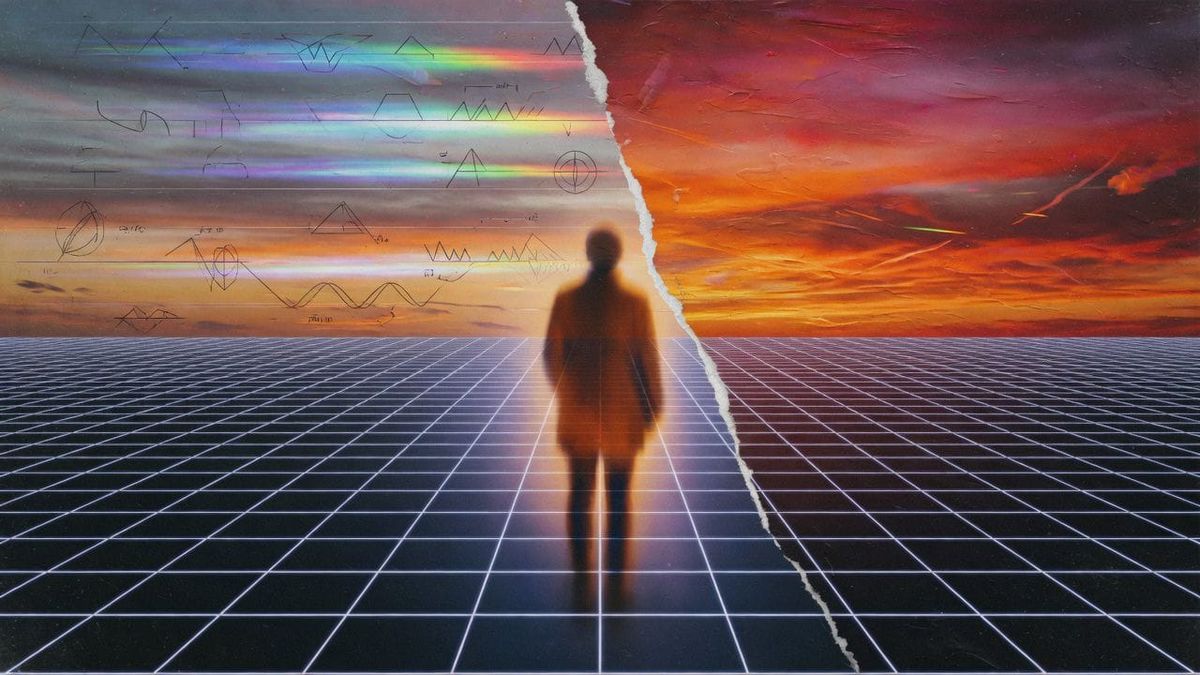
What physics left behind when it built its cathedral — and why the residue demands a different architecture
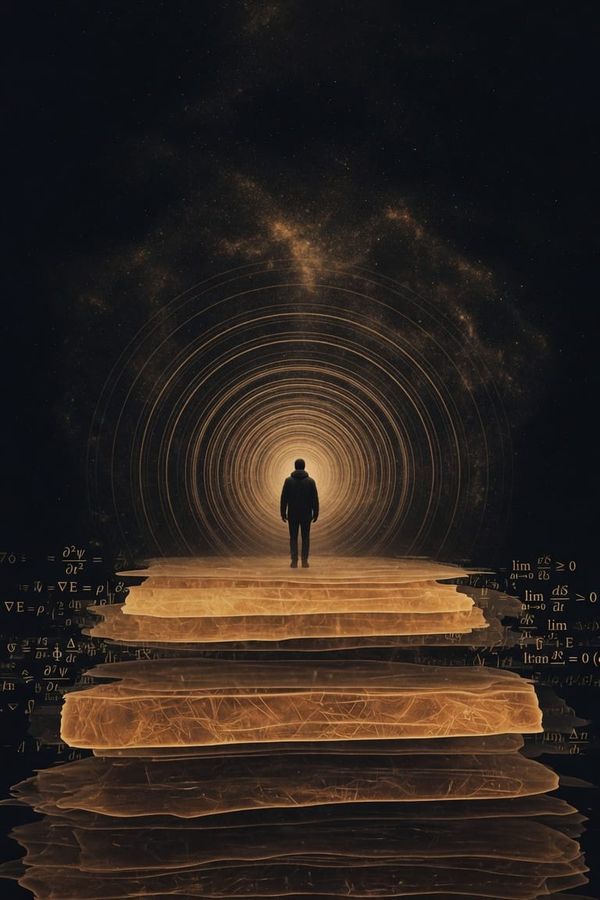
When Galileo decided that only measurable properties are relevant to the scientific description of the real, he did not discover that the universe is mathematical. He chose to treat the universe as if it were only what mathematics can capture.
This choice has a technical name in the philosophy of science: the distinction between primary and secondary qualities. Primary qualities — extension, figure, motion, number — are objective and measurable. Secondary qualities — color, sound, taste, pain — are subjective and observer-dependent. Physics built its entire edifice upon primary qualities. And it did so with extraordinary success.
But in doing so, it did not demonstrate that secondary qualities are unreal. It demonstrated only that they are inaccessible to its methods.
“A complete physical model of a sunset — wavelengths of light, atmospheric refraction angle, spectral composition — does not contain what makes a sunset a sunset for the one who sees it.”
The physical description is precise, verifiable, and empty of the phenomenon it claims to describe — when that phenomenon is the sunset as experience. This is not a criticism of physics. It is the precise description of what physics is: a system that functions by removing the observer, then expresses surprise when the observer does not fit the results.
A map that omits the taste of gas-station coffee is useful — that taste is irrelevant to navigation. A map that omits the driver is different in kind, not in degree. Because the driver is not an omitted detail — the driver is the condition of possibility for the map to have any function at all. Without a driver, the map is not incomplete. It is purposeless.
Physics omits the observer not as an irrelevant detail, but as the condition of possibility that the system cannot include without transforming itself into a different system entirely.
The cost is uninhabitability. A universe described without the observer who inhabits it is a universe that exists only as abstraction — mathematically precise, ontologically empty. This does not prevent physics from being useful. It prevents physics from being sufficient.
The Treatise does not ask physics to be what it cannot be. It asks only that physics name what it excluded — so that the residue of that exclusion may finally find a system capable of sheltering it.
“The primordial error was not excluding the observer. It was forgetting that he had been excluded — and treating the universe that remained as if it were the entire universe.”
About this excerpt
This excerpt is drawn from Chapter 6 of the Treatise on the Ontological Contact Zone — a systematic philosophical work developing the Philosophy of Temporal Integration: the position that consciousness constitutes lived time through constitutive asynchronicity and ontological lag.
The full treatise maps the architecture of what physics excluded — not to refute physics, but to build the second structure that physics' success made necessary. The ZCO is that structure.